
The Rise and Fall of the Habsburg Empire in One Interactive Timeline
Austria’s imperial saga spans nearly 700 years, and revolves, remarkably, around a single family - the Habsburgs.
Some context
As a very high level overview, the land that is now Austria were once provinces of the Western Roman Empire. Todays Vienna / Wien was known to the Romans as Vindobona. After the Western Roman Empire fell in 476, centuries were spent as a chaotic frontierland: Germanic tribes, then Bavarians and Slavs moved in. Around 800 AD Charlemagne (King of the Franks and who would eventually become known as the first Holy Roman Emperor) conquered it and made it a defensive border zone against the Avars (the ‘Eastern March’). In 976 that ‘March’ was given to the Babenberg family, who turned it into the independent Duchy of Austria, and established Vienna as the capital (as it remains today!). When the Babenbergs died out in 1246, it was eventually seized by Rudolf of Habsburg in 1278, beginning the impressively long Habsburgs era.
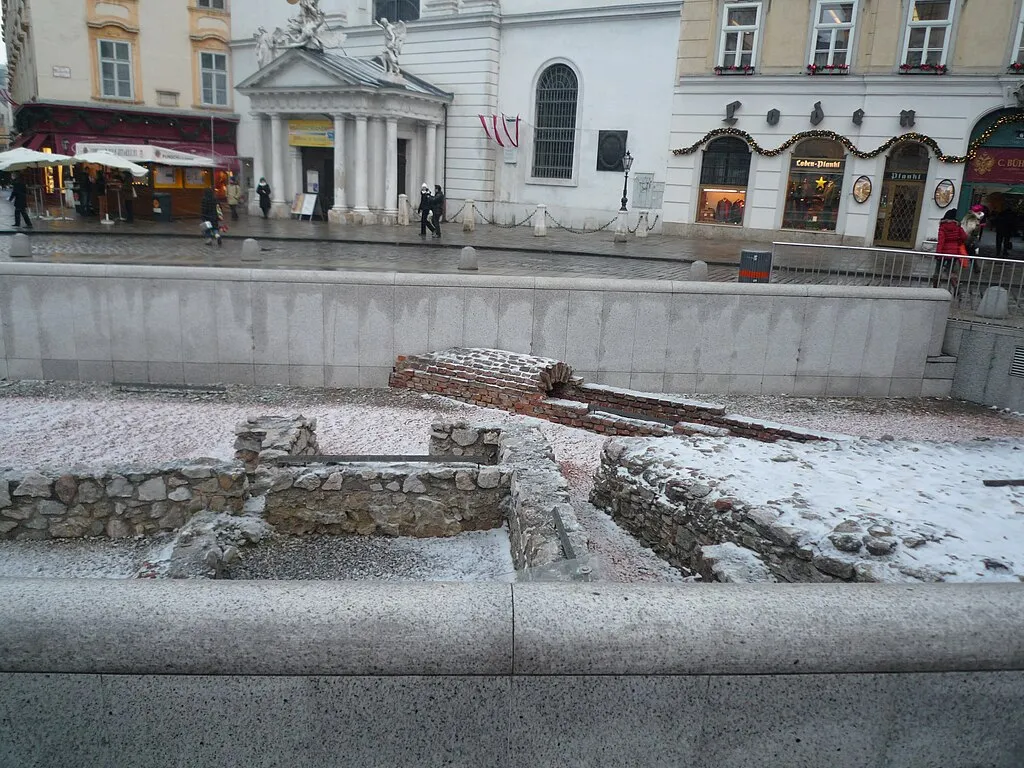
Image credit: Roman ruins Hofburg Dec 2012 (https://commons.wikimedia.org/wiki/User:Assassin3577), licensed under CC BY-SA 3.0.
During routine pavement renovation work outside of the Hofburg Palace, these Romans ruins, which show the base of old houses were found, and turned into a protected site.
Origins of the name Austria
As an interesting aside, the name Austria comes from one tiny place-name that first appeared in a document issued by Holy Roman Emperor Otto III in 996 AD, which referred to a place “in the region commonly called Ostarrîchi”. As the first time the name appears in writing, historians treat it as the birth certificate of the name Austria. In Old High German this word translates as ‘the eastern realm’ or ‘eastern march / country’:
- Ostar- = east
- rîchi = realm, kingdom (the same word that gives us modern German Reich)
And which was apt as, to the German-speaking world in the west, this was the place on the eastern edge of their world.
Then over the centuries the name changed:
- Ostarrîchi (996)
- Osterrîche (around 1100)
- Österreich (modern German)
- Austria (Latin/English)
Cool! (We wrote another blog post about the the Roman Empire, and how it relates to the Holy Roman Empire, here).
The Habsburgs
For over 640 years (1273 - 1918), there was continuous Habsburg-family rule over Austria. I’ve pulled some details about the key 6 figures, and then put a table of the most notable 10 for a high-level overview.
1273 - Rudolf I Seizes Austria: From Swiss Count to the founder of the Habsburg imperial rule
Rudolf I of Habsburg was a originally quite a minor Swiss count, whom was elected as King of the Romans, which eventually became known as the Holy Roman Emperor (a story in and of itself). One of his goals was to reassert imperial control over rebellious fiefs like Austria, whose nobles had resisted foreign control. He defeated the King of Bohemia Ottokar II at the Battle of the Marchfeld (between Vienna and Hainburg an der Donau today) in 1278. A few years later, he gave Duchies to his sons, and thus made rule in Austria hereditary.
“Austriae est imperare orbi universo” - “It is the destiny of Austria to rule the whole world”
The Habsburg motto is born.
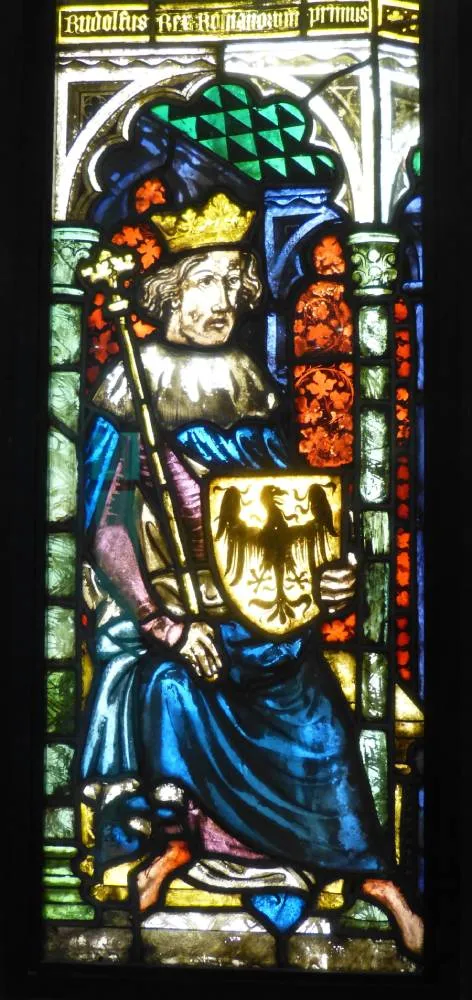
Image credit: “WMK Stefansdom – Habsburg Fenster 1a König Rudolf I” by Wolfgang Sauber, CC BY-SA 4.0, via Wikimedia Commons

After being damaged by fire during World War II, this stained glass window was restored, but moved from Stephansdom in Vienna to Wien Museum Karlsplatz.
1740 - 1780 - The Iron Empress: Maria Theresa’s Golden Reforms
In 1740 Maria Theresa, the only woman to rule Austria in her own right, inherited the throne. Her father Charles VI had no male heirs, and resultantly had spent over two decades getting Europe to sign a treaty allowing his daughters to inherit (The Pragmatic Sanction (1713)). The Habsburgs domain at the time of his death included Austria, Bohemia, Hungary, the Austrian Netherlands, parts of Italy and more. Such sprawling productive lands, as well as the Salic Law Traditions which backed male-only inheritance, proved too tempting to many of the European rulers of the time, and Prussia, Bavaria, Spain and France allied against Maria Theresa. After 8 years of The War of the Austrian Succession however, Maria Theresa emerged as the victor, and went on to become one of the most celebrated rulers in Austrian history. Here are some of the most important points about her time as ruler:
- crowned Queen of Hungary
- had 16 children! - 4 of which went on to rule other nations
- introduced compulsory education for both boys and girls (1774)
- abolished torture in 1776
- centralised taxes by ending noble tax exemptions
- built a 200,000 man standing army
- limited forced labour
- started to lay the groundwork for increased religious tolerance for Jews & Protestants
In 1780 at her death, she was succeeded by her eldest son Joseph II, who had been co-ruling with her since 1765.
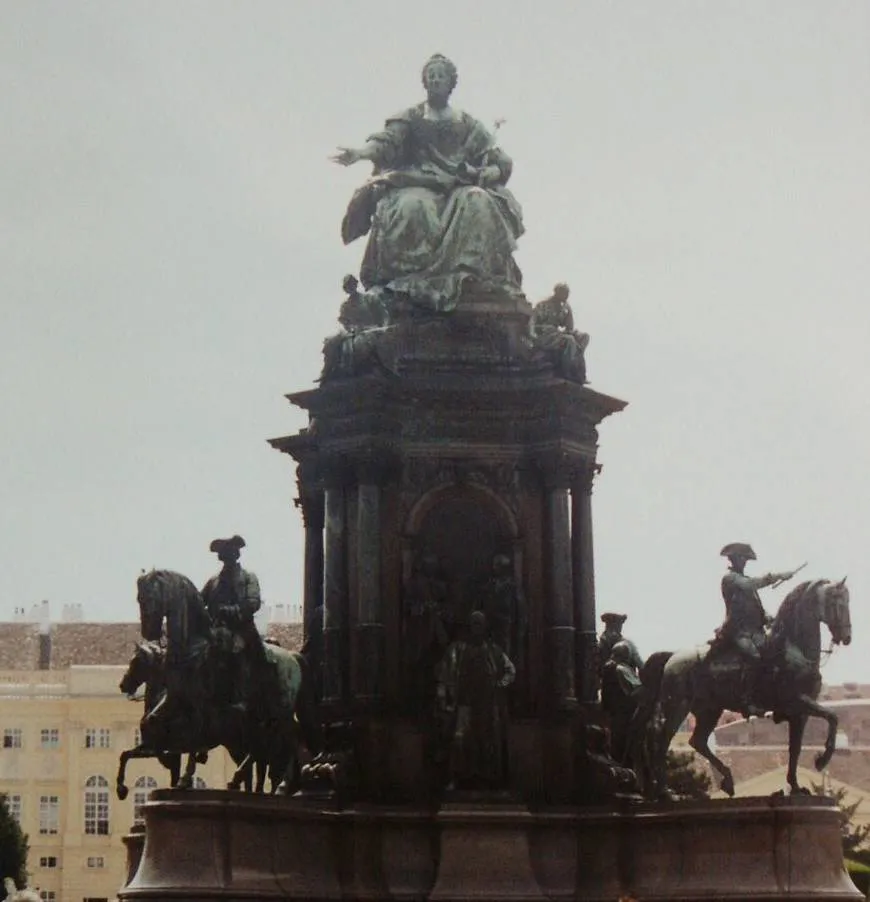
Image credit: “Vienna Statue of Empress Maria-Theresia (9812661525)” by Andrew Bossi, CC BY-SA 2.0, via Wikimedia Commons
.jpg)
1765 - 1790 - Joseph II: The Radical Reformer
Joseph II was known as the ‘revolutionary emperor’, as he became famous for launching over 6000 reform edicts in his 10 years rule (Josephinism), including
- freedom for Protestants & Jews
- freed serfs, angers nobles
- dissolved Monasteries, seized Church wealth and funded hospitals and schools
- tried to unify 11 ethnic groups with German as the official language
- decreed that nobles would pay full taxes
His reforms, which were usually without consultation often met fierce resistance, and many were reversed after his death.
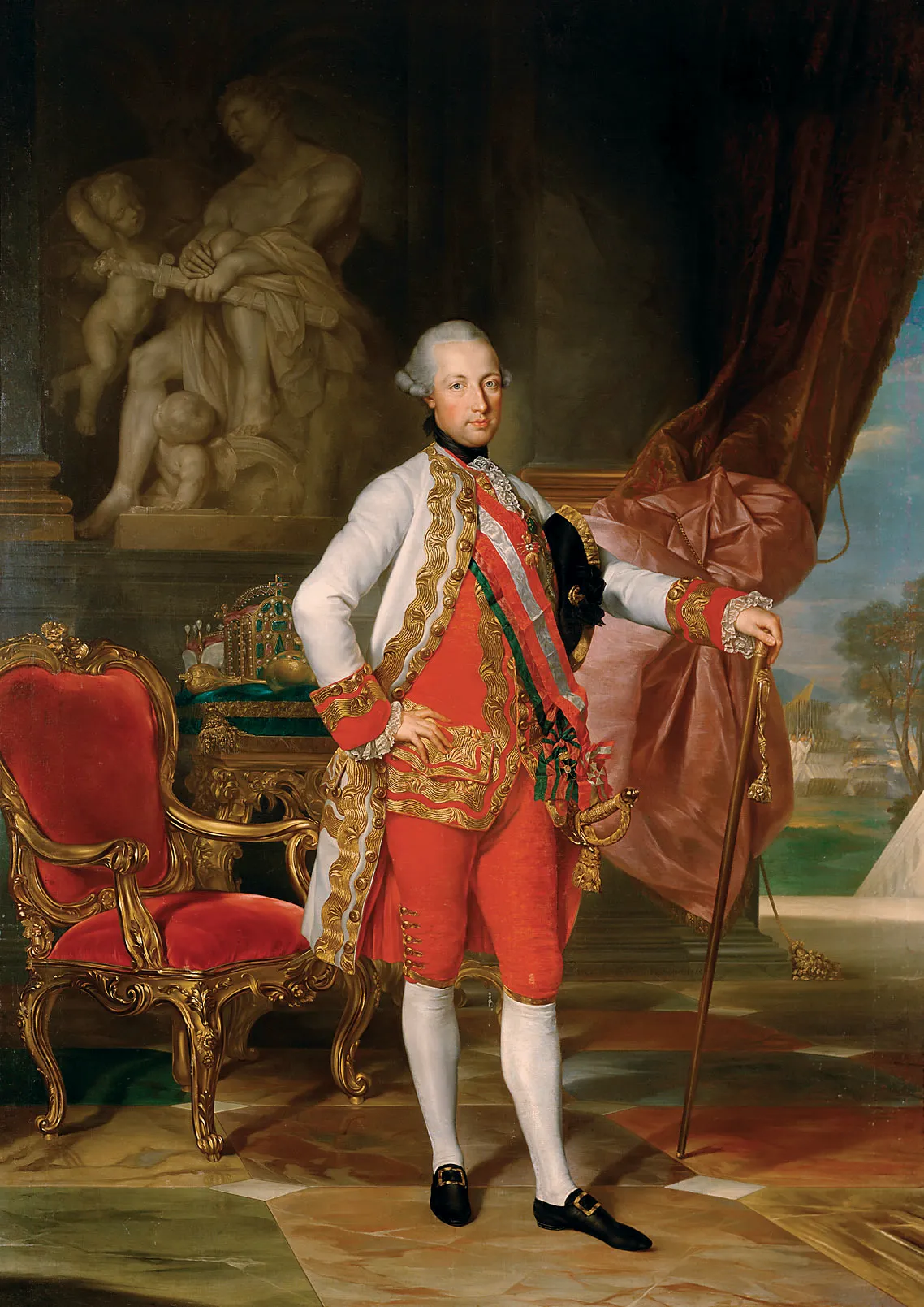
Image credit: “Anton von Maron 006” by Anton von Maron (died 1808), Public Domain, via Wikimedia Commons Anton von Maron: Kaiser Joseph II. (1741-1790) with a Statue of Mars.

1848 - 1916 - Franz Joseph I: The 68-Year Emperor Who Modernized a Crumbling Empire
Franz Joseph I ascended the throne at 18 amid the fiery revolutions of 1848, crushing Hungarian and Viennese uprisings with help from the Tsar Nicolas I. His 68-year reign was the longest of any Habsburg and ended up transforming Austria from a feudal patchwork into an industrial dual monarchy. Sadly personal tragedies and diplomatic blunders set the stage for World War I.
- 1848 Revolutions crushed - executed rebel leaders; centralized power
- Lost Lombardy-Venetia (1859/1866) - defeats by France & Prussia shrink Italian holdings
- Ausgleich of 1867 - compromise creates Austria-Hungary; crowned King of Hungary in Budapest
- Industrial surge - railways triple (1850–1880); Vienna Ringstrasse replaces fortifications; empire’s population doubles to 52 million
- Personal tragedies
- brother Maximilian executed in Mexico (1867);
- son Rudolf’s suicide at Mayerling (1889);
- wife Elisabeth (“Sisi”) assassinated in Geneva (1898)
- Bosnia annexed (1908) – Ignites Balkan powder keg
- Sarajevo assassination (1914) – Nephew Franz Ferdinand murdered → July Ultimatum → World War I
He really needs his own blog post, and we look forward to writing that!
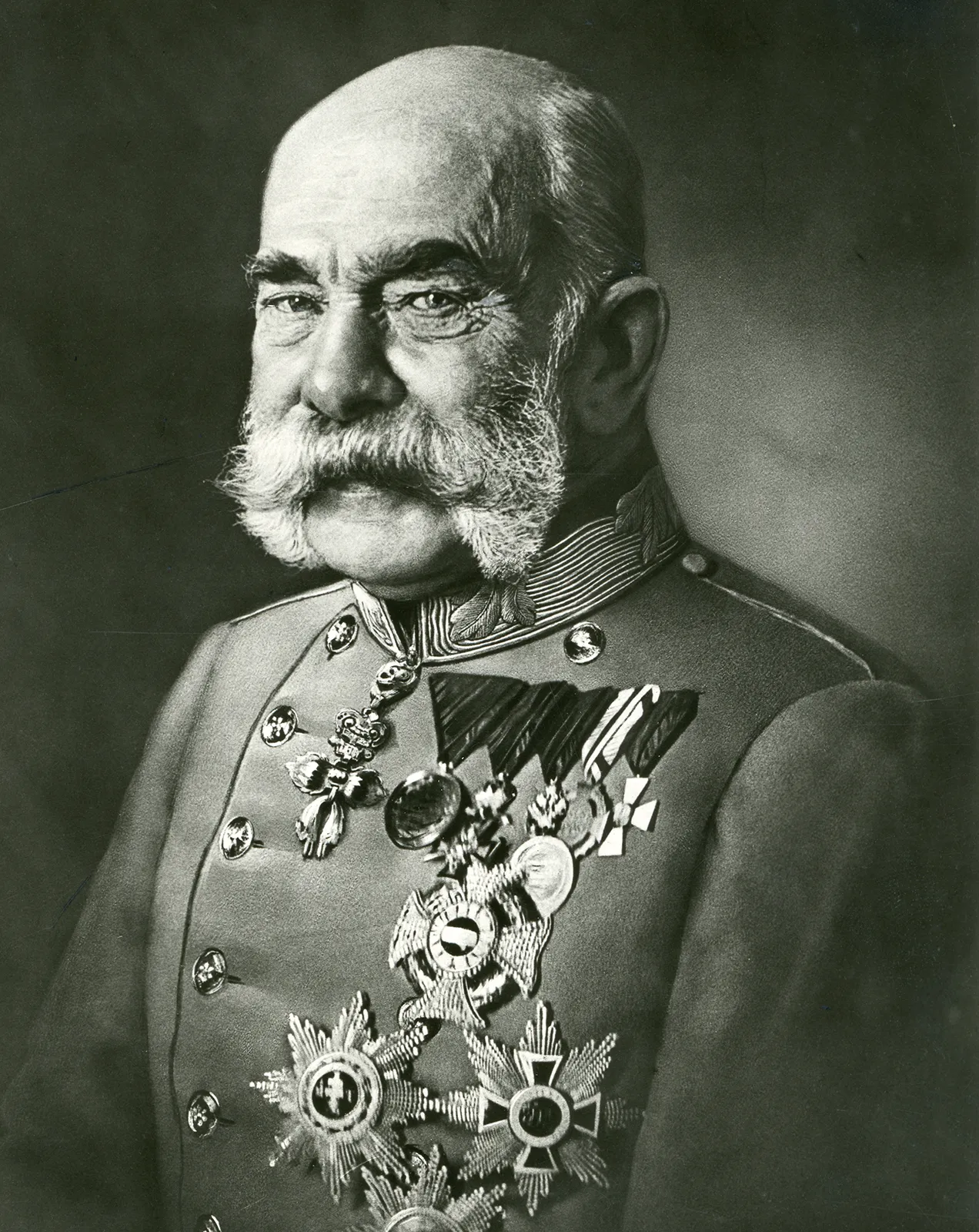
Image credit: “Emperor Franz Joseph I of Austria” by Carl Pietzner (1910), public domain, via Wikimedia Commons
1854 - 1898 - Empress Elisabeth (“Sisi”): The Tragic Icon of the Habsburg Court
Also a topic for another blog post, but worth mentioning here: Empress Elisabeth—universally known as ‘Sisi’ -was never a ruler, but her beauty, rebellious nature, depression and eventual assassination turned her into Austria’s most enduring myth. Married at 16 to Franz Joseph I, she shunned tradition and court etiquette, running instead to poetry, dieting, and world travel, all whilst captivating Europe.
- Wedding (1854) - 16-year-old Bavarian duchess weds Franz Joseph; 10,000-watch ceremony in Vienna
- Beauty regimen - she apparently had 3-hour hair sessions, a 19-inch waist and exercised with gymnastics rings in the Hofburg
- Politically influential - she pushed for the 1867 Ausgleich (compromise) and charmed Hungarian nobles to secure dual monarchy
- Children & grief - she had four births; daughter Sophie dies (1857); son Rudolf’s Mayerling suicide (1889) shatters her
- Travels – Built Achilleion Palace on Corfu; sailed on imperial yacht Miramar
- Assassination (1898) – Anarchist Luigi Lucheni stabs her with a file on Lake Geneva; dies whispering “What really happened?” Especially tragic was that Luigi Lucheni stabbed her purely because she was a convenient high-profile royal victim — she was not a political or personal target of his ideology! He had actually wanted to stab another Prince, but after that Prince cancelled his trip, he found ‘Sisi’ instead.
From being fairy-tale bride to a global traveler, her life and its tragedies have inspired films (including a trilogy), musicals and more.
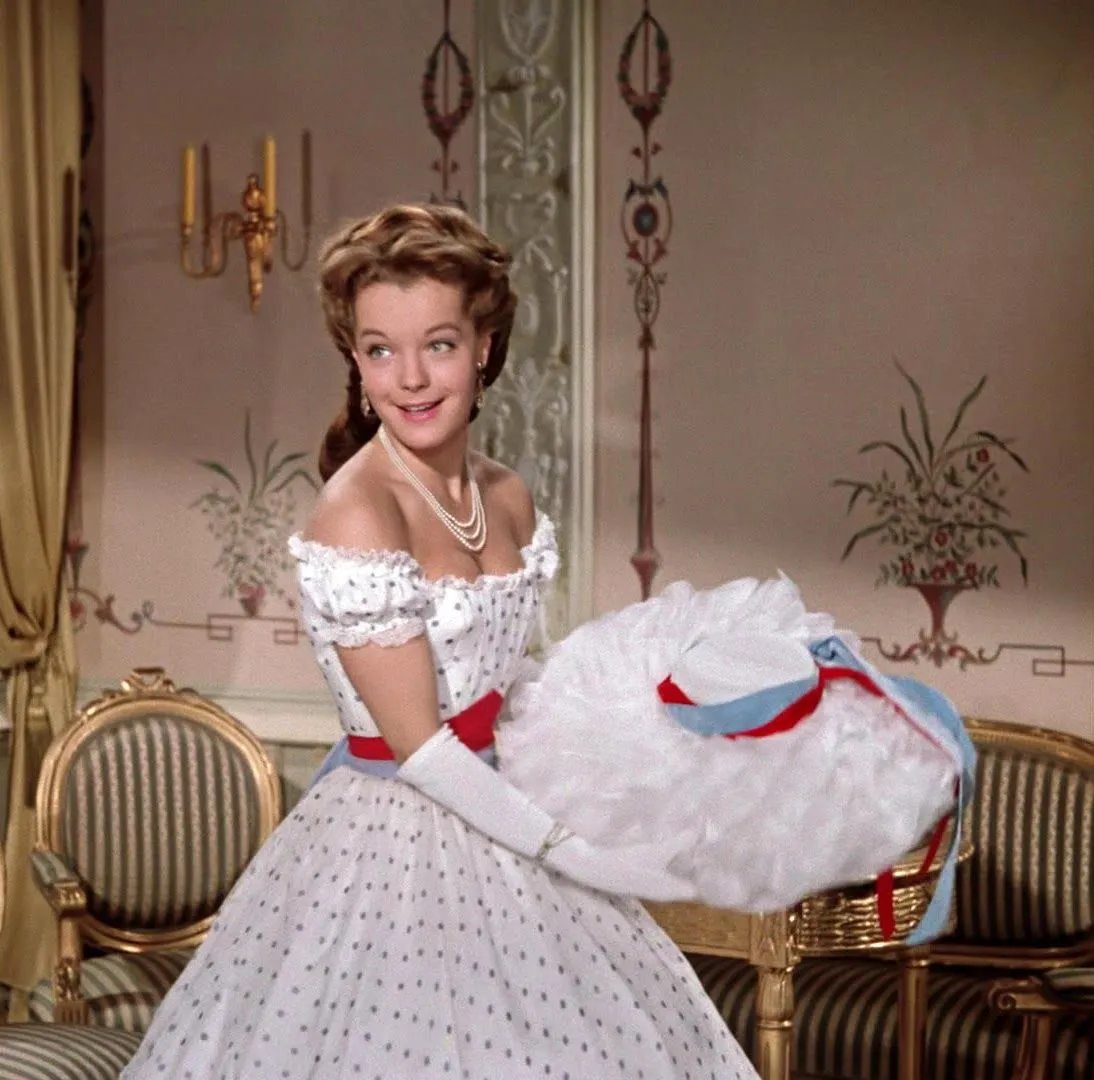
Image credit: Promotional still from Sissi (1955, dir. Ernst Marischka; Roxy Film), featuring Romy Schneider as Empress Elisabeth of Austria. Fair use for educational/critical purposes. Source: Film still via Pinterest.
1916 - 1918 - Karl I: The Last Emperor’s Desperate Quest for Peace
When Charles I inherited the throne in November 1916, the Dual Monarchy was starving, mutinous, and disintegrating along ethnic lines. The young emperor - beatified by the Catholic Church in 2004 for his peace effort - launched secret diplomacy and federalisation plans, but arrived too late to save the 645-year Habsburg saga.
- ascends mid-WWI (1916) - faces famine, mutinies, and 11 restless nationalities
- Sixtus Affair (1917) – secret peace letters via brother-in-law Prince Sixtus of Bourbon-Parma; leak enrages Germany
- Bread Peace with Ukraine (1918) - exchanges recognition for grain; fails to stop collapse
- Federalization manifesto (Oct 1918) - proposes U.S.-style federation; ignored by Czechs, Yugoslavs, Poles
- Abdicates Nov 11, 1918 - “Relinquishes participation” but refuses formal abdication; exiled to Switzerland
- Failed Hungarian restorations (1921) - two coups foiled; exiled to Madeira; dies of pneumonia aged 34 (1922)
And with his death, the Habsburg line eventually ends after 645 years. Phew, what a run!
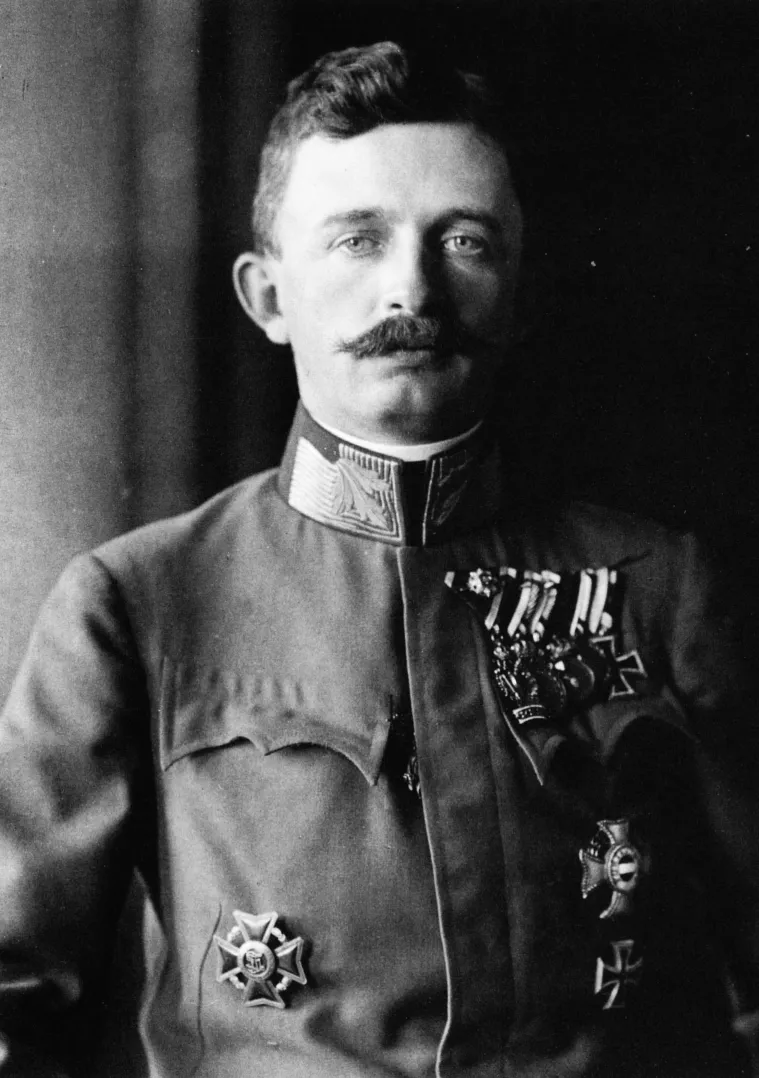
Image credit: “Karl I. (Erzherzog von Österreich), 1917” by Unknown photographer (ca. 1917), Public Domain, via Wikimedia Commons
,_1917.jpg)
A tabular overview of the 10 most prominent Habsburg rulers
| # | Ruler | Reigned | Why they’re famous / important |
|---|---|---|---|
| 1 | Rudolf I | 1273–1291 | Beat Ottokar II, grabbed Austria for the Habsburgs in 1282 → the dynasty’s founder in Austria |
| 2 | Maximilian I | 1493–1519 | “The man who married Europe” – his marriages + wars gave the Habsburgs Spain, Burgundy, Bohemia, Hungary |
| 3 | Charles V | 1519–1556 | Ruled the empire “on which the sun never set” (Spain + colonies, Austria, HRE, Netherlands); split the dynasty into Spanish and Austrian branches |
| 4 | Ferdinand I | 1556–1564 | Got the Austrian half after Charles V retired; secured Bohemia and Hungary for the family |
| 5 | Rudolf II | 1576–1612 | Mad alchemist-emperor in Prague; his reign triggered the Thirty Years’ War (1618–1648) |
| 6 | Maria Theresa | 1740–1780 | Only woman to rule; survived 8 years of war to keep the throne, modernised the state, mother of 16 children |
| 7 | Joseph II | 1780–1790 | “The revolutionary emperor” – tried radical Enlightenment reforms (abolished serfdom, religious tolerance, etc.) |
| 8 | Franz Joseph | 1848–1916 | Longest-reigning (68 years); ruled through 1848 revolutions, loss of Italy & Germany, creation of Austria-Hungary, and into World War I |
| 9 | Elisabeth (“Sisi”) | Empress 1854–1898 | Not a ruler but the most famous Habsburg consort – beauty icon whose murder in 1898 became a symbol of the dying empire |
| 10 | Karl I | 1916–1918 | Last emperor; tried to make peace in World War I, lost everything in 1918, died in exile 1922 |
Here is how I added these events to my timeline:
Want to build a similar timeline? Start creating it now at Timeglide.io.